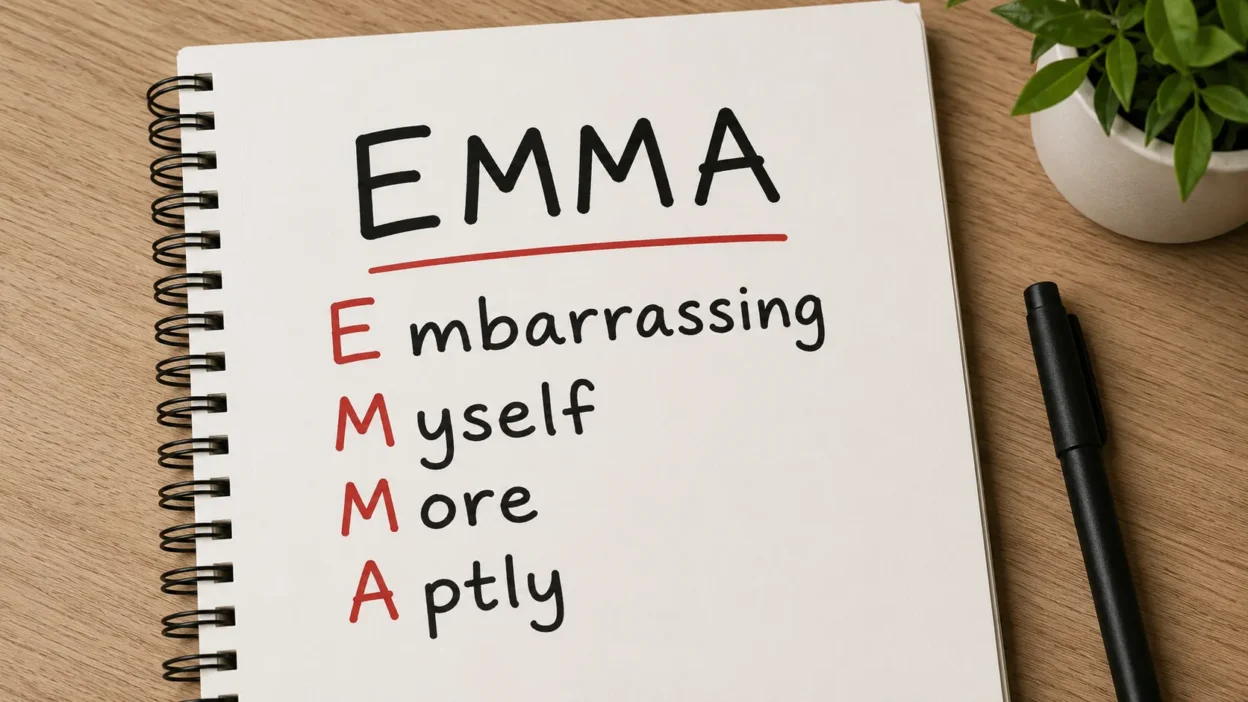
You’re scrolling through your messages when a friend suddenly replies, “I literally emma right now 😭” and you freeze. Emma? The name? A person? You read it three times and still feel lost. Sound familiar? Don’t worry, you’re definitely not alone. This kind of slang pops up all the time in casual texting and social media, leaving even the savviest internet users scratching their heads. Let’s break it down!
⚡ Quick Answer
Emma in slang means
“Embarrassing Myself More Aptly”
or more commonly, it’s used as a shorthand expression of being overwhelmingly embarrassed, awkward, or cringe-worthy in a relatable, self-deprecating way. It’s casual, funny, and very Gen Z.
🧠 What Does Emma Mean in Text?
In modern internet slang and texting culture, Emma is most commonly used as a humorous expression that means “Embarrassing Myself More Aptly.” It’s the kind of slang that captures that universally painful moment when you do something so awkward or clumsy that you can’t help but laugh at yourself.
Think of it this way: you trip in front of your entire class, your voice cracks at the worst possible moment during a presentation, or you accidentally like a photo from five years ago on your crush’s profile. That gut-sinking, face-palming feeling? That’s an Emma moment.
It can also sometimes simply be used as a name-based inside joke or meme reference within specific friend groups, but the slang usage as a descriptor of embarrassment is the most widespread and recognized form online.
Emma = Embarrassing Myself More Aptly
A casual, self-deprecating way to describe awkward or cringe moments 😬
📱 Where Is “Emma” Commonly Used?
This slang didn’t just appear out of nowhere it spread through specific corners of the internet where Gen Z humor and relatability culture thrive. Here’s where you’ll find it most:
TikTok
Very common
Comments & DMs
Close friends
Snapchat
Casual chats
Twitter/X
Meme threads
Gaming Chats
Discord, etc.
Tags you might see it alongside:
#relatable #cringe #awkward #emma moment #fail #embarrassing
It’s entirely casual and informal. You would never see “emma” used in a professional email, a formal essay, or a business message. It belongs to the world of relaxed, authentic, everyday conversation between friends.
💬 Examples of “Emma” in Conversation
Seeing it in context is the best way to really get it. Here are 7 realistic chat examples:
Example 1 The Accidental Like
omg i just liked my ex’s photo from 2019 while stalking 😭LMAOOO you are so emma rn 💀
Example 2 The Wrong Name
i called my teacher mom in front of the whole class todayno way 😭😭 peak emma behavior honestly
Example 3 The Autocorrect Disaster
just sent “i love you” to my boss by accident bc of autocorrectbro you literally emma’d yourself out of a job 💀
Example 4 Self-Aware Moment
i waved back at someone who wasn’t actually waving at me 😭classic emma we’ve all been there lol
Example 5 Public Fail
tripped up the stairs at school while everyone was watching 💀omg that’s so emma!! are you okay tho 😭
Example 6 The Wrong Group Chat
sent a voice memo of me singing to the family group chat instead of my best friend 😩that’s so emma of you 😭😭 legendary
Example 7 Self-Description
i literally walked into a glass door today with people watchingomg 😭i am so emma it hurts← using “emma” as a self-descriptor
🕓 When to Use and When Not to Use “Emma”
Using slang at the wrong moment can backfire. Here’s a simple guide:
✅ When To Use
- Texting close friends about awkward moments
- Commenting on relatable social media posts
- Sharing funny, self-deprecating stories
- In casual DMs on Instagram or TikTok
- When you want to bond over shared awkwardness
❌ When NOT To Use
- In professional emails or work chats
- When talking to elders or authority figures
- In formal presentations or school essays
- With people who don’t use internet slang
- In serious or emotionally sensitive situations
| Context | Example Phrase | Why It Works | Tone |
| Friend Chat | “bro that was so emma 😭” | Relatable humor between friends | Casual |
| Instagram Comment | “emma behavior honestly lol” | Fits casual social media tone | Casual |
| Colleague Chat | “Haha that was a bit embarrassing!” | Professional-friendly alternative | Semi-formal |
| Work Email | “Apologies for the oversight.” | Respectful and appropriate | Formal |
🔄 Similar Slang Words or Alternatives
If “emma” doesn’t feel right in the moment, here are some similar expressions you can swap in:
| Slang | Meaning | When To Use | Tone |
| Cringe | Embarrassingly awkward | Reacting to secondhand embarrassment | Very Casual |
| L (took an L) | Suffered a loss or embarrassment | After a fail or bad situation | Casual |
| Slay | Opposite doing amazingly well | When someone nails something | Casual |
| Oof | Expressing pain or awkwardness | Reacting to someone else’s bad moment | Very Casual |
| Dead (I’m dead) | Something was so funny/awkward | After an extreme or hilarious fail | Casual |
| Facepalm | A gesture of embarrassment or disbelief | When someone does something obviously silly | Slightly dated |
❓ FAQs About “Emma” in Text Slang
Q: Does “emma” always refer to embarrassment in texts?
Mostly yes in slang contexts, “emma” is used to describe an embarrassing or cringe-worthy moment. However, context matters. If someone is literally talking about a person named Emma, it’s a name, not slang.
Q: Is “emma” the same as “cringe”?
They’re very similar! Both describe awkward or embarrassing situations. “Emma” adds a self-deprecating, almost endearing flavor that “cringe” doesn’t always carry.
Q: Can I use “emma” to describe someone else’s embarrassment?
Absolutely! You can say “that’s so emma” or “she pulled a total emma” to describe another person’s awkward moment in a light-hearted way.
Q: Is “emma” offensive to people named Emma?
Not intentionally the slang isn’t targeted at anyone. But it’s always good to read the room. If your friend is actually named Emma, maybe choose a different expression to avoid confusion or unintended hurt feelings.
Q: Where did the slang “emma” originate?
Like many internet slang terms, it evolved organically through Gen Z online culture, particularly on TikTok and Twitter, where self-deprecating humor and relatable content are extremely popular.
Q: Can “emma” be used in a positive context?
Generally, no it carries a negative or embarrassed connotation. However, in very ironic or self-aware humor, someone might use it playfully to own their awkwardness with confidence.
Q: Is “emma” used globally or mostly in one region?
While it originated in English-speaking Gen Z communities online, it’s spread globally through social media platforms like TikTok and Instagram wherever English internet culture reaches.
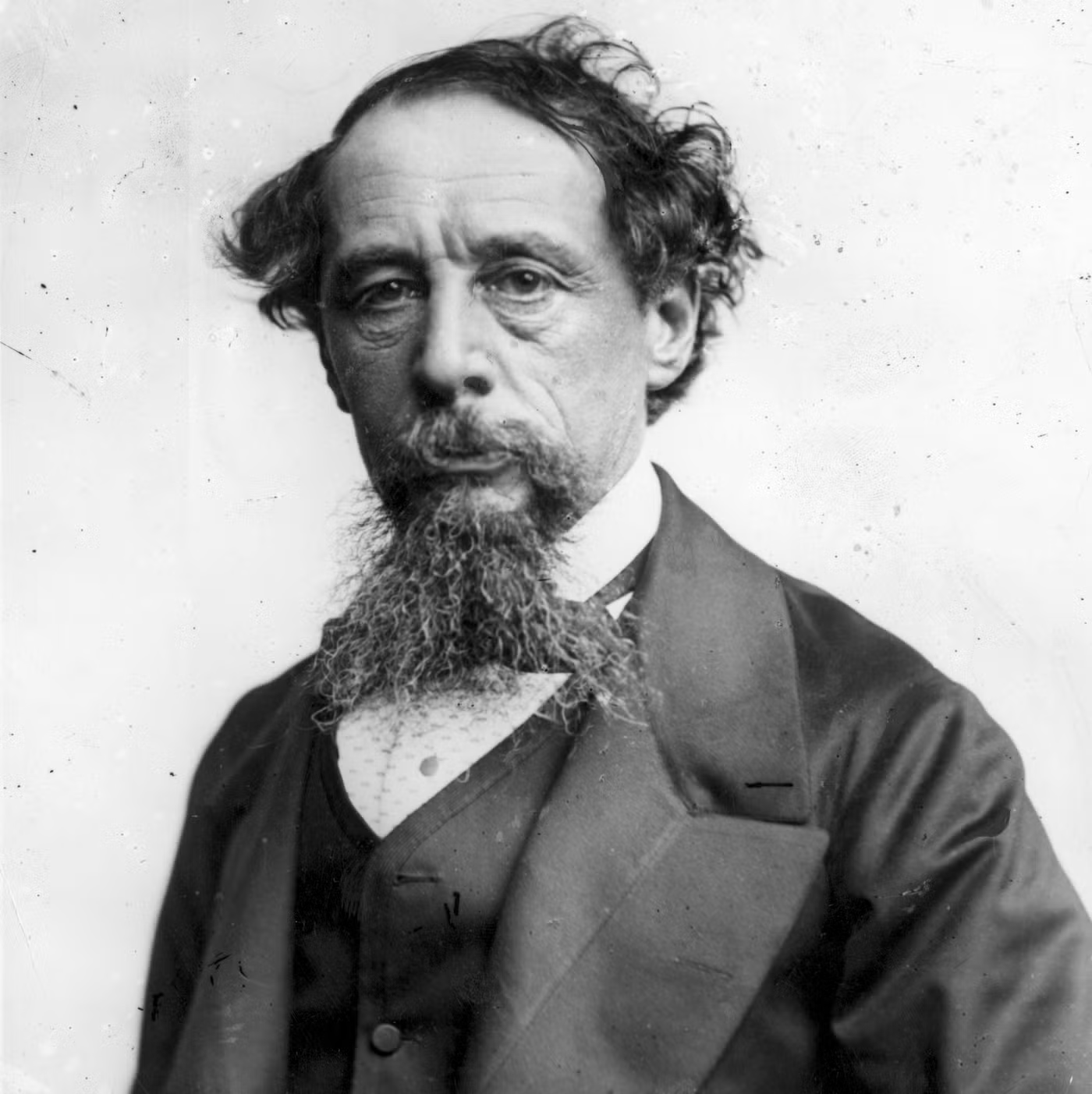
Charles Dickens was a famous 19th-century English writer known for powerful storytelling and unforgettable characters. His classic novels like Oliver Twist and Great Expectations highlight social issues, humanity, and hope. At msgvibes.com, we honor Charles Dickens by sharing his timeless words and literary inspiration that still touch hearts today.