Picture this: you’re scrolling through texts from your friend, and they drop the word “twat” right in the middle of a rant. You stare at your screen, completely unsure whether to laugh, gasp, or ask for clarification. Sound familiar? You’re definitely not alone. This word pops up constantly in British banter, online chats, and even TV shows, yet many people aren’t quite sure what it means or when it’s acceptable to use it.
Quick Answer:
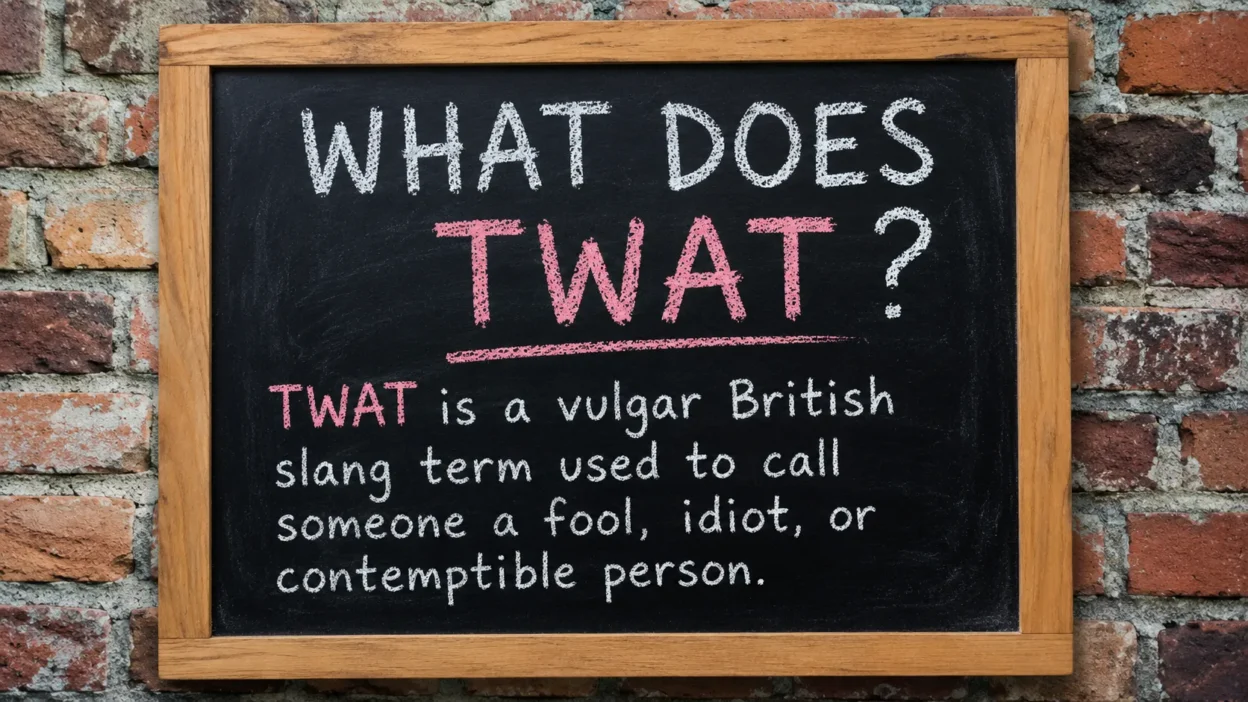
“Twat” is a vulgar British slang term used to call someone a fool, idiot, or contemptible person. It’s an informal, often offensive word commonly used in casual British speech, comedy, and social media but it can be deeply rude depending on context and audience.
🧠 What Does “Twat” Mean in Text?
The word “twat” originates from British English and has two distinct meanings depending on usage and region. In its most common modern slang usage especially in texting and social media “twat” is used to describe someone as a stupid, irritating, or contemptible person. Think of it as a ruder, more biting version of calling someone an “idiot” or “fool.”
In everyday British casual conversation, it’s often used in frustration or light-hearted teasing between friends. For example: “Stop being such a twat and just pick a restaurant already.” Here, it’s used in exasperation, not as a serious insult.
It also has a second, explicitly anatomical meaning (referring to female genitalia), which makes it a genuinely vulgar and offensive word in many contexts especially in American English, where this secondary meaning is more front-of-mind.
In short: Twat = British slang = a fool, idiot, or contemptible person (and/or a vulgar anatomical term).
📱 Where Is “Twat” Commonly Used?
This word is firmly rooted in British culture, though it’s spread through pop culture, streaming, and social media. Here’s where you’ll encounter it most:
- 💬 Text messages mostly among close British friends using casual banter
- 🐦 Twitter / X used in frustrated rants or in jokey insults between mutuals
- 📺 British TV shows series like Peaky Blinders, The Inbetweeners, and Fleabag use it freely
- 🎮 Gaming chats used as a generic trash-talk insult
- 🎵 TikTok / British creator content heard regularly in UK-based comedy videos
- 📖 Online forums (Reddit, Discord) British users drop it casually in thread arguments
Formality level: Strictly casual. This word is never appropriate in professional, academic, or formal settings. It’s social-media-friendly only within communities that are comfortable with strong British slang.
💬 Examples of “Twat” in Conversation
A: He just turned up two hours late with no apology 😤
B: What a twat honestly, you deserve better
A: I locked myself out of the house again lol
B: you absolute twat 😂 how many times is this now
A: Did you see what he posted on his story??
B: yeah he’s such a twat, ignore him
A: I can’t believe she took credit for your idea in the meeting
B: i know!! complete twat move ngl
A: bro why did you tell everyone about my crush 😭
B: omg i’m such a twat i’m so sorry!!!
A: He cut me off in traffic and then gave ME a dirty look
B: lmao the audacity of that twat 😂
A: I accidentally replied-all to the whole company email list
B: hahaha you twat!! what did you say 😭
🕓 When to Use and When Not to Use “Twat”
✅ When to use it
- Joking around with close British friends
- Reacting to someone doing something dumb (light-heartedly)
- Venting to a trusted friend about someone rude
- Watching/discussing UK comedy content
- Casual online banter with mutuals who share this style
❌ When NOT to use it
- At work, in emails, or professional settings
- Around children or elderly family members
- With American audiences (carries stronger anatomical meaning)
- In any formal or public-facing communication
- When speaking to someone you don’t know well
| Context | Example phrase | Why it works (or doesn’t) |
| British friend chat | “You absolute twat 😂” | Casual banter between mates affectionate and funny |
| Venting to a friend | “That guy at work is such a twat” | Informal frustration fine in private conversation |
| Work email | “Please take your time reviewing this.” | Professional twat would be wildly inappropriate here |
| American audience | Avoid it | Anatomical meaning is more prominent likely to offend |
| UK comedy/TV discussion | “That character is a proper twat lol” | Fits the cultural register of British humour online |
🔄 Similar Slang Words or Alternatives
| Slang | Meaning | When to use |
| Muppet | A foolish or silly person | Mild, safe for most casual contexts even around family |
| Numpty | A stupid or clueless person (Scottish) | Affectionate and funny low offence level |
| Bellend | A rude or idiotic person (British) | Crude but common in UK banter avoid formal contexts |
| Plonker | A foolish person (British) | Playful and mild popularised by Only Fools and Horses |
| Tosser | An obnoxious or contemptible person | British slang casual/informal, moderate offensiveness |
| Idiot / Moron | A foolish person | Universal safe for nearly any informal situation |
❓ FAQs About “Twat”
Is “twat” a swear word?
Yes, it’s considered a vulgar word in English. In the UK, it’s treated as a moderate swear word and used fairly freely in casual conversation. In the US, it’s considered more offensive due to its anatomical meaning.
Can “twat” be used affectionately?
In British slang, yes close friends often call each other twats in a teasing, playful way (e.g., “you silly twat”). Context and tone completely change the meaning.
Is “twat” more offensive in the US or the UK?
Generally more offensive in the US, where the anatomical definition is the primary understood meaning. In the UK, the “idiot” meaning is dominant and the word is far more casually used.
Can I use “twat” on social media?
Most platforms don’t automatically filter it, but it can still violate community guidelines or land badly depending on your audience. Use with awareness of who follows you.
What is the origin of the word “twat”?
The anatomical meaning dates to at least the 17th century in Old English. The “idiot/fool” sense developed in British slang more recently, likely in the 20th century, and is now the dominant meaning in everyday UK speech.
Is “twat” appropriate around children?
No. It’s a vulgar term and should never be used around minors, in schools, or in any family-friendly environment regardless of the intended meaning.

Virginia Woolf is a creative writer at msgvibes.com, sharing simple yet meaningful messages and quotes that reflect emotions, thoughts, and everyday moments.