
Have you ever been scrolling through social media or reading a text message when someone suddenly called a person “toxic”? The first time many people see this word used in texting, it can be a little confusing. After all, “toxic” originally describes something poisonous. So why are people using it in conversations online?
In modern texting and social media, “toxic” has become a popular slang term used to describe negative, unhealthy, or harmful behavior. Whether you’re chatting on Snapchat, scrolling through TikTok comments, or messaging friends, you’ll likely come across this term often.
Quick Answer:
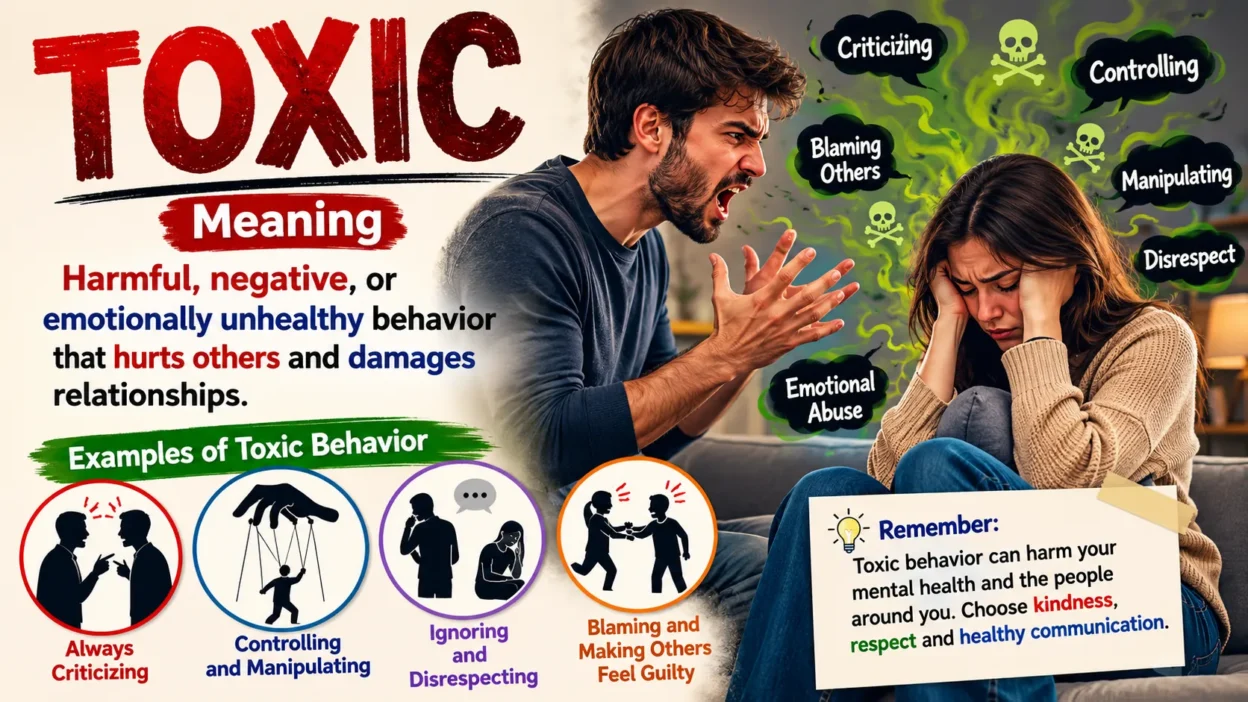
Toxic means harmful, negative, or emotionally unhealthy behavior. It’s a casual and social-media-friendly way of describing someone or something that creates negativity, drama, or emotional stress.
What Does Toxic Mean in Text?
In texting, toxic refers to a person, relationship, attitude, or behavior that negatively affects others. Someone may be called toxic if they constantly create drama, manipulate people, spread negativity, or make others feel bad.
The term doesn’t have a specific acronym or full form. Instead, it is a slang expression borrowed from the word “toxic,” which literally means poisonous. Online, it describes emotional or social harm rather than physical danger.
Example:
Text:
“Why do you still talk to him? He’s so toxic.”
Meaning:
The person believes that “he” has unhealthy or harmful behavior.
In short: Toxic = Harmful Behavior = Negative or Unhealthy Influence.
Where Is Toxic Commonly Used?
You’ll find the word toxic across many digital platforms and online communities.
📱 Popular Places Where Toxic Is Used
- 💬 Text messages
- 👻 Snapchat chats
- 🎵 TikTok comments
- 📸 Instagram captions and reels
- 🐦 X (Twitter) posts
- 🎮 Gaming chats
- 📱 WhatsApp conversations
- 🧑🤝🧑 Online forums and communities
Tone of the Word
- ✅ Casual
- ✅ Social-media friendly
- ✅ Common among teens and adults
- ⚠️ Can sound critical or judgmental
- ❌ Not suitable for formal business communication
People often use “toxic” when discussing relationships, friendships, workplaces, gaming communities, or social behavior.
Examples of Toxic in Conversation
Here are some realistic examples showing how the word is used in everyday chats.
Example 1
A: why did you unfollow her?
B: she was getting really toxic 😒
Example 2
A: are you joining the group chat again?
B: nah, it’s too toxic for me
Example 3
A: he keeps making fun of everyone
B: that’s toxic behavior tbh
Example 4
A: why did they break up?
B: their relationship became toxic 💔
Example 5
A: you seem happier lately
B: yeah, i stopped hanging around toxic people 😊
Example 6
A: the gaming lobby was crazy last night
B: seriously, everyone was being toxic 😑
Example 7
A: should i reply to him?
B: honestly, he’s kinda toxic 🚩
These examples show how “toxic” is commonly used to describe unhealthy attitudes, relationships, or interactions.
When to Use and When Not to Use Toxic
Knowing when to use the word correctly can help you communicate more effectively.
✅ When To Use Toxic
- Describing unhealthy friendships
- Talking about negative relationships
- Discussing manipulative behavior
- Referring to constant drama
- Mentioning harmful attitudes
- Talking casually with friends
- Commenting on social media discussions
❌ When Not To Use Toxic
- Formal business emails
- Professional reports
- Academic writing
- Legal discussions
- Serious workplace evaluations
- Situations where you lack enough information about someone
Since “toxic” can be a strong label, it’s best to use it carefully and only when it accurately describes harmful behavior.
Usage Comparison Table
| Context | Example Phrase | Why It Works |
| Friend Chat | “That friendship became toxic 😬” | Casual and relatable |
| Social Media | “Toxic vibes everywhere today.” | Common online expression |
| Relationship Discussion | “The relationship turned toxic.” | Clearly explains the issue |
| Work Chat | “The environment feels unhealthy.” | More professional wording |
| “There are communication challenges.” | Formal and appropriate | |
| School Assignment | “Negative behavioral patterns were observed.” | Academic language |
Similar Slang Words or Alternatives
If you want to express a similar idea, here are some common alternatives to “toxic.”
| Slang | Meaning | When to Use |
| Drama | Constant conflict or problems | Casual conversations |
| Red Flag 🚩 | Warning sign about someone | Dating and friendships |
| Negative | Pessimistic attitude | General situations |
| Manipulative | Controlling behavior | Discussing relationships |
| Fake | Not genuine or honest | Social interactions |
| Problematic | Behavior causing issues | Social media discussions |
While these words are similar, “toxic” usually suggests a stronger and more ongoing pattern of harmful behavior.
Why Has Toxic Become So Popular Online?
The rise of social media has made discussions about mental health, relationships, and personal boundaries much more common. As a result, people needed a simple word to describe unhealthy behavior.
“Toxic” became popular because it’s short, easy to understand, and quickly communicates that someone’s actions are harmful to others.
Today, you’ll see phrases such as:
- Toxic friendship
- Toxic relationship
- Toxic workplace
- Toxic community
- Toxic behavior
- Toxic mindset
These phrases are now part of everyday internet language.
Is Toxic Always About Relationships?
No. Although many people associate the term with romantic relationships, it can apply to many situations.
For example:
- A toxic friendship
- A toxic family environment
- A toxic workplace
- A toxic gaming community
- A toxic social media group
Any situation that consistently causes stress, negativity, or emotional harm may be described as toxic.
FAQs About Toxic Meaning in Text
What does toxic mean in texting?
Toxic means harmful, negative, manipulative, or emotionally unhealthy behavior in a person, relationship, or situation.
Is toxic a slang word?
Yes. While “toxic” is a real dictionary word, it is widely used as modern internet slang.
Does toxic mean dangerous?
Not usually physically dangerous. In texting, it generally refers to emotional, mental, or social harm.
Is calling someone toxic an insult?
It can be. Many people view the label as criticism because it suggests harmful behavior.
Is toxic used on Snapchat and TikTok?
Yes. Toxic is extremely common on Snapchat, TikTok, Instagram, X, and other social platforms.
Can a friendship be toxic?
Yes. A friendship may be considered toxic if it constantly involves negativity, manipulation, or emotional stress.
Is toxic a formal word?
The word itself is formal, but its slang meaning is mostly used in casual conversations and social media.
What is a toxic relationship?
A toxic relationship is one where unhealthy behaviors regularly cause emotional harm, stress, or unhappiness.
Conclusion
The term toxic is one of the most popular slang words used online today. In texting, it refers to harmful, negative, or emotionally unhealthy behavior. Whether you’re discussing friendships, relationships, gaming communities, or social media interactions, the word helps describe situations that create ongoing negativity.
Understanding the meaning of toxic in text can help you better follow online conversations and communicate more effectively when discussing unhealthy behaviors or relationships.

Ernest Hemingway is a passionate writer and storyteller, dedicated to sharing meaningful messages that inspire, motivate, and connect people. Through his work on MsgVibes.com, he brings thoughtful insights and heartfelt words to readers around the world