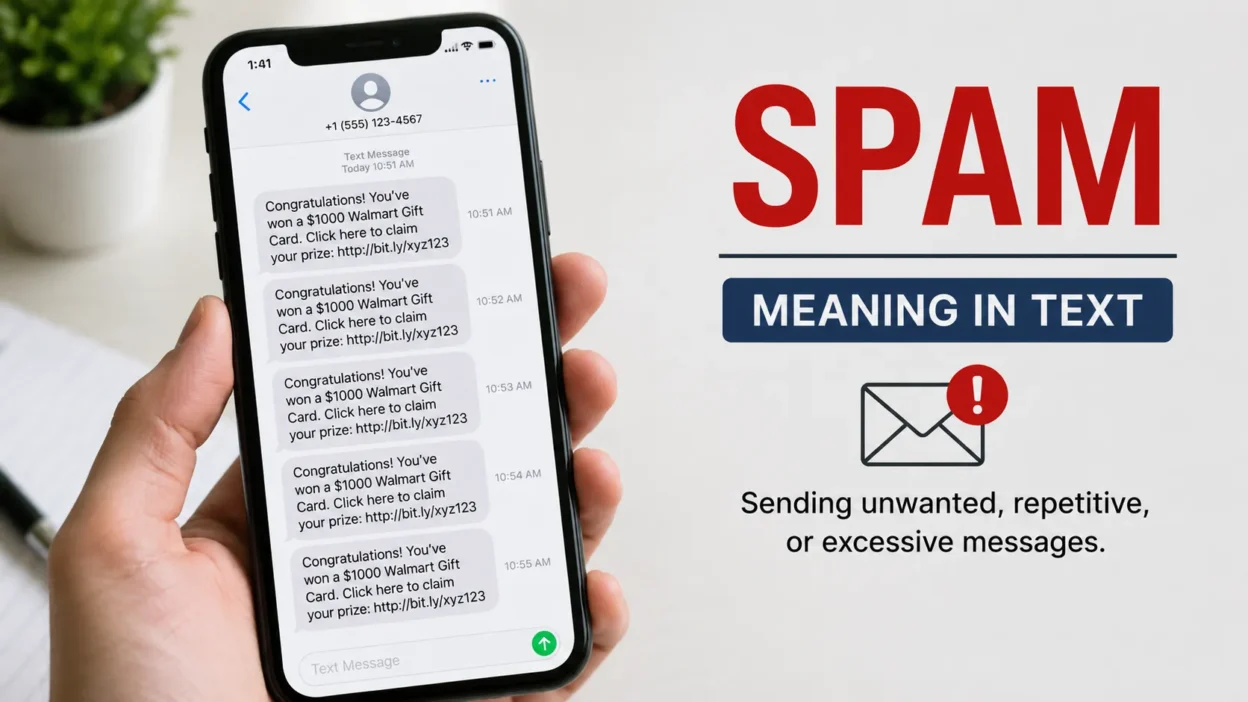
The first time I saw someone reply with “stop spamming me 😂,” I wondered what they actually meant. Were they talking about emails, messages, or something else? If you’ve come across the word “spam” in a text message, social media comment, or group chat, you’re not alone. It’s a common internet term that people use every day, but its meaning can change slightly depending on the situation.
Quick Answer:
Spam means sending unwanted, repetitive, or excessive messages. It’s usually a casual internet term used when someone floods a chat, inbox, comment section, or platform with too many messages or promotions.
What Does Spam Mean in Text?
In texting and online conversations, spam refers to messages that are unwanted, repetitive, irrelevant, or sent in large quantities. Someone may accuse another person of “spamming” if they keep sending messages repeatedly or post the same content over and over.
For example:
Example:
- A: why did you send me 15 messages in 2 minutes? 😅
- B: sorry lol, didn’t mean to spam you
The term can refer to:
- Repeated text messages
- Promotional messages
- Unwanted emails
- Excessive comments on social media
- Repetitive posts in gaming chats
In short: Spam = Unwanted or excessive messages = Flooding a chat, inbox, or platform.
Where Is Spam Commonly Used?
You’ll often see the word “spam” across many digital platforms:
📱 Text Messages
- Sending multiple texts in a row
- Repeatedly messaging someone without a reply
💬 Group Chats
- Flooding conversations with memes, stickers, or messages
- Posting the same message repeatedly
- Repeating comments
- Sending mass DMs
🎵 TikTok
- Repeated comments under videos
- Promotional messages
👻 Snapchat
- Sending snaps or chats excessively
🎮 Gaming Chats
- Repeating messages in live chat
- Posting unnecessary links or advertisements
- Unwanted marketing emails
- Scam or promotional messages
Tone: Spam is usually a casual internet term. It can be neutral, humorous, or slightly negative depending on the context.
Examples of Spam in Conversation
Here are some realistic examples showing how people use “spam” in text conversations:
Example 1
A: why is my phone buzzing nonstop? 😂
B: sorry, i was spamming memes lol
Example 2
A: stop spamming the group chat 😭
B: okay okay, i’ll chill
Example 3
A: who keeps posting the same comment?
B: probably a spam account
Example 4
A: did you get my message?
B: yeah, all 12 of them 😆 stop spamming
Example 5
A: my inbox is full of spam emails
B: same, i get dozens every day
Example 6
A: don’t spam the game chat
B: my bad, won’t do it again
Example 7
A: why did you send the same reel five times?
B: because it was hilarious 😂
When to Use and When Not to Use Spam
✅ When To Use
Use “spam” when:
- Someone sends too many messages
- Content is repetitive
- You’re talking about unwanted emails
- Discussing social media comments
- Referring to fake promotional accounts
- Chatting casually with friends
❌ When Not To Use
Avoid using “spam” when:
- Writing professional emails
- Communicating in formal business settings
- Discussing serious issues
- Speaking with clients or customers
- Writing academic content
| Context | Example Phrase | Why It Works |
| Friend Chat | “stop spamming me 😂” | Casual and playful |
| Group Chat | “please don’t spam the chat” | Clear and common |
| Gaming Chat | “no spam in chat” | Standard gaming rule |
| Work Chat | “please avoid repeated messages” | More professional |
| “please consolidate your updates” | Formal and respectful |
Similar Slang Words or Alternatives
| Slang/Term | Meaning | When to Use |
| Flooding | Sending too many messages | Group chats and gaming |
| Blowing Up My Phone | Sending many texts rapidly | Casual conversations |
| Mass Messaging | Sending messages to many people | Social media and marketing |
| Junk Mail | Unwanted emails | Email discussions |
| Bot Messages | Automated repetitive messages | Social media platforms |
| DM Bombing | Sending excessive direct messages | Instagram, Snapchat, TikTok |
FAQs About Spam
What does spam mean in texting?
Spam means sending too many unwanted, repetitive, or unnecessary messages in a conversation.
Is spam a bad thing?
Usually yes. Spam is often viewed negatively because it can be annoying or disruptive.
What is a spam message?
A spam message is an unwanted text, email, comment, or direct message sent repeatedly or in bulk.
What does “stop spamming” mean?
It means someone wants another person to stop sending excessive messages or repeated content.
Can friends spam each other jokingly?
Yes. Friends often use the word humorously when someone sends many messages in a short time.
Is spam only used for emails?
No. Spam can refer to texts, social media comments, DMs, gaming chats, and emails.
What is a spam account?
A spam account is typically a fake or automated profile that posts repetitive content or advertisements.
Why are spam emails common?
Businesses, scammers, and automated systems often send bulk emails to large groups of people.
Is spamming against platform rules?
Many social media and gaming platforms prohibit spam because it harms user experience.
What does spam call mean?
A spam call is an unwanted phone call, often promotional or fraudulent.
Can repeated emojis be considered spam?
Yes, if someone floods a chat with excessive emojis repeatedly.
What is comment spam?
Comment spam happens when users repeatedly post the same comment on videos, blogs, or social media posts.
Does spam always involve advertising?
No. Spam can simply be excessive or repetitive messaging without any advertisement.
What is anti-spam protection?
Anti-spam protection helps block unwanted emails, texts, and online messages.
Can group chats have spam?
Yes. Excessive messages, repeated memes, and unnecessary content can be considered spam.
Why do people say “don’t spam”?
They want to keep conversations organized and avoid message overload.
Is spam slang?
Yes. In internet culture, spam is a widely used slang term for repetitive or unwanted messaging.
What is the difference between spam and scams?
Spam refers to unwanted messages, while scams are messages intended to deceive or steal information.
Can businesses send spam?
Yes. Marketing messages become spam when recipients don’t want them or receive them excessively.
Is spam used worldwide?
Yes. The term spam is recognized globally across texting, social media, email, and gaming communities.

George Orwell is a passionate writer and observer of human behavior, sharing insights and thoughtful messages on MsgVibes.com. He aims to inspire, entertain, and connect readers through meaningful words that resonate in everyday life.