Ever had someone tell you to “just be authentic” and you stared at your screen thinking… wait, what does that actually mean? You’re not alone. Whether you saw it in a caption, a self-help post, or your friend texted “omg she’s so authentic,” it can feel like one of those words everyone uses but nobody actually defines. Let’s break it down in a way that actually makes sense.
Quick Answer:
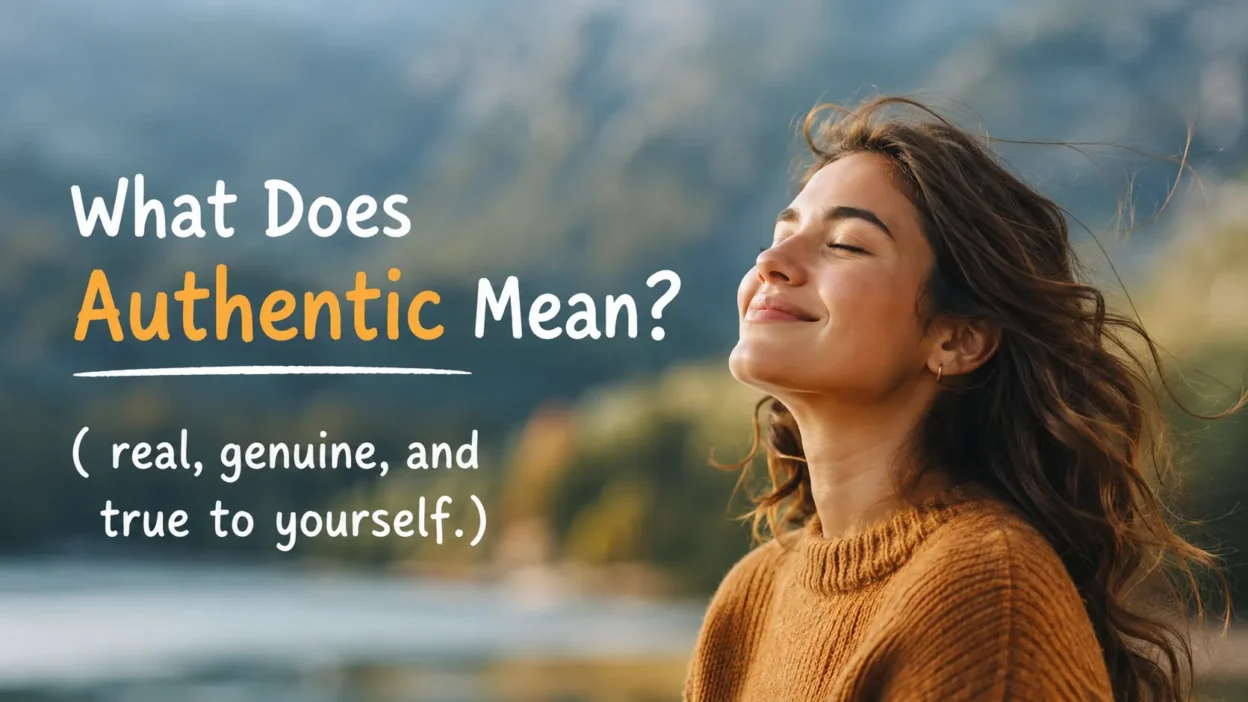
Authentic means “real, genuine, and true to yourself.” It’s a positive and slightly serious way of saying someone (or something) isn’t fake, pretending, or putting on a show it’s the real deal.
What Does Authentic Mean in Text? 🧠
The word authentic comes from the Greek word authentikos, meaning “original” or “genuine.” In everyday texting and social media, it’s used to describe someone who is being completely real not performing for likes, not faking their personality, and not trying to be someone they’re not.
When someone calls a person “authentic,” they’re saying that person shows up as themselves flaws, opinions, quirks and all without any filter or pretense. It can also describe things: an authentic story, an authentic piece of advice, or even an authentic vibe.
Example: “I love her content because it feels so authentic she never tries to be someone she’s not.”
In short: Authentic = Real + Genuine = True to yourself with no fakeness involved.
Where Is “Authentic” Commonly Used? 📱
You’ll spot this word everywhere once you start looking:
- 📸 Instagram captions
- 🎵 TikTok voiceovers
- 💬 Text messages
- 🐦 Twitter/X threads
- 📺 YouTube creator bios
- 💼 LinkedIn posts
- 🎙️ Podcasts & interviews
- 🧘 Self-help communities
On social media, “authentic” is a huge buzzword especially on TikTok, where creators often talk about “authentic content” as the gold standard. It’s also super common in self-help and wellness spaces, where being authentic to your values is seen as the key to mental wellness and meaningful relationships.
In terms of tone: Casual ✅ Semi-formal ✅ it’s flexible and works across most social contexts, though it tends to feel more meaningful and slightly serious than pure slang.
Examples of “Authentic” in Conversation 💬
Example 1 Complimenting a friend
A:i love how she doesn’t try to be perfect on instagram 😭
B:right?? she’s so authentic, that’s why everyone loves her
Example 2 About a creator
A:did u watch her new tiktok?
B:yes!! it felt so authentic, no filters no fake stuff just real talk 👏
Example 3 Self-reflection text
A:i’ve been trying to be more authentic lately, stopped pretending to be okay when i’m not
B:that takes courage honestly, proud of u 💛
Example 4 Calling out fakeness
A:his apology felt super scripted tho
B:exactly, not very authentic if u ask me 🙄
Example 5 Dating context
A:how was the date?
B:actually really good!! he was so authentic, didn’t try to impress me, just talked normally
Example 6 About a brand or product
A:do u think their sustainability campaign is real?
B:not rly 😅 it doesn’t feel authentic at all, prob just for marketing
Example 7 Encouraging a friend
A:idk what to post, i feel like nothing i do is good enough
B:just be authentic!! people connect way more with real content than perfect content 💯
When to Use and When Not to Use “Authentic” 🕓
✅ When To Use
- Complimenting someone’s realness
- Describing genuine content or art
- Encouraging someone to be themselves
- Casual chats about relationships or people
- Social media captions or bios
- Discussing personal growth
❌ When Not To Use
- Very formal business documents
- Legal or technical writing
- When you need a more specific synonym (e.g. “verified” or “original”)
- Ironic or sarcastic tone (can confuse)
- Describing objects (better: “genuine” or “original”)
| Context | Example Phrase | Why It Works |
| Friend Chat | “omg she’s so authentic 😭” | Casual, warm compliment |
| Instagram Caption | “just trying to keep it authentic ✨” | Relatable and on-brand for social media |
| Self-help Context | “authentic living means being true to your values” | Semi-formal, meaningful, widely understood |
| Work Setting | “we want our messaging to feel authentic to our audience” | Professional and appropriate |
| Formal Email | “genuine and transparent” (use this instead) | More precise in a corporate context |
Similar Slang Words or Alternatives 🔄
| Word/Phrase | Meaning | When to Use |
| Real | Not fake; honest and genuine | Everyday casual texting (“keep it real”) |
| Genuine | Truly sincere; not pretending | Slightly more formal than authentic |
| Unapologetic | Confident in who you are without excusing yourself | When emphasizing boldness in being yourself |
| Raw | Unfiltered and emotionally honest | Describing vulnerable content or moments |
| No-filter | Sharing exactly what you think or feel | Social media, casual chats |
| Keepin’ it 100 | Being completely honest and real | Informal texting, pop culture slang |
FAQs About “Authentic” ❓
Is “authentic” a compliment?
Yes, almost always. Calling someone authentic is one of the highest compliments you can give it means you see them as genuinely themselves, not fake or performative.
Can “authentic” be used to describe things, not just people?
Absolutely. You can describe authentic food (traditional, made the real way), authentic art (original, not a copy), or an authentic experience (genuinely felt, not manufactured).
Is “authentic” a formal or informal word?
It’s both. It sits comfortably in casual texts and social media, but also works in professional settings like brand messaging, HR, and leadership conversations.
What’s the opposite of authentic?
The opposite would be fake, phony, inauthentic, performative, or contrived all describing someone or something that isn’t being real.
Why is “authentic” such a popular word on social media?
Because audiences are increasingly tired of curated, perfect content. Being “authentic” signals that a creator or person is trustworthy, relatable, and worth following it’s practically a currency on TikTok and Instagram right now.
Can being “authentic” go too far?
In rare cases, yes. Some people use “being authentic” as an excuse for rude or inconsiderate behavior. Authenticity at its best is honest and kind it doesn’t mean ignoring others’ feelings.
What does “authentic self” mean?
Your authentic self is who you truly are when you’re not performing or trying to meet others’ expectations your real values, personality, and way of being in the world.

Ernest Hemingway is a passionate writer and storyteller, dedicated to sharing meaningful messages that inspire, motivate, and connect people. Through his work on MsgVibes.com, he brings thoughtful insights and heartfelt words to readers around the world