You’re scrolling through your messages when suddenly someone drops a casual “hru?” and you freeze wait, what? Is that a typo? A new app? A secret code? 😅 If you’ve ever stared at those three little letters wondering what on earth they mean, you’re definitely not alone. Text slang moves fast, and it can feel like everyone else got the memo except you.
But don’t worry you’ve come to the right place.
Quick Answer:
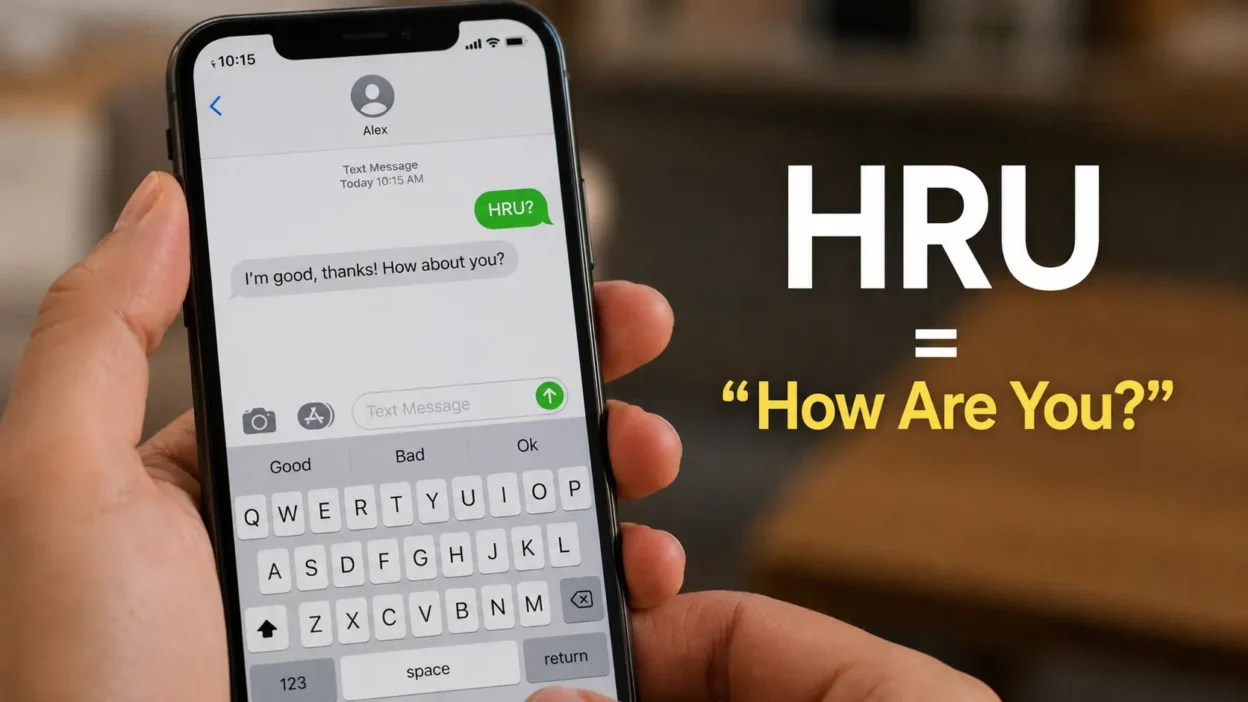
HRU means “How Are You?” It’s a friendly, casual way of checking in on someone over text or social media short, sweet, and straight to the point.
What Does HRU Mean in Text?
HRU is a text abbreviation for the classic phrase “How Are You?” It’s one of those ultra-common slang shortcuts that people use to save time while keeping the conversation warm and personal.
Instead of typing out the full question which, let’s be honest, feels a little formal in a Snapchat DM people just type HRU and get the same message across in seconds.
Example sentence:
“Hey! Haven’t talked in forever. HRU? 😊”
In this context, the sender is genuinely asking how the other person is doing it’s a quick, low-effort way to restart a conversation or check in on a friend.
In short: HRU = How Are You = A casual, friendly check-in.
Where Is HRU Commonly Used? 📱
HRU is everywhere in the digital world. Here’s where you’ll spot it most often:
- 💬 Text Messaging The most common place. Friends text “hru?” to catch up.
- 📸 Snapchat Often sent along with a selfie snap or as a quick chat opener.
- 🎵 TikTok Comments & DMs Used casually when sliding into someone’s inbox.
- 📘 Facebook Messenger Popular with older teens and young adults.
- 🎮 Gaming Chats (Discord, etc.) Gamers use it between matches to check in with squad members.
- 🐦 Twitter/X DMs Common in informal conversations.
- 📲 Instagram DMs Frequently used as a conversation starter.
Tone Check:
- ✅ Casual absolutely
- ✅ Social-media friendly 100%
- ❌ Formal not at all
HRU is firmly in the casual, everyday texting category. You would never open a work email with “HRU?” save it for your group chats and DMs.
Examples of HRU in Conversation 💬
Here are some real-life style chat examples showing how HRU actually gets used:
Example 1 Casual Check-In:
A: hey hru? haven’t seen u in ages 😭 B: omg i know!! i’m good tho, been so busy. hru??
Example 2 Conversation Starter:
A: hru 😊 B: tired lol but fine haha, u?
Example 3 Reconnecting with an Old Friend:
A: bro i just found our old pics 😭 hru these days?? B: dude no way 😂 i’m doing great actually!! life’s been wild
Example 4 Flirty Context:
A: been thinking about you 👀 hru? B: aww really? 🥺 i’m good now that you texted lol
Example 5 Group Chat Opener:
A: guys hru all doing?? it’s been so quiet in here 😭 B: lmaooo sorry i’ve been dead 💀 C: same honestly 😂 but doing okay!!
Example 6 After a Hard Week:
A: hey, hru? heard things were rough last week 💙 B: yeah it was a lot but i’m feeling better, ty for checking in 🥺
Example 7 Morning Text:
A: good morning ☀️ hru today? B: sleepy but alive 😭 hru?
When to Use and When Not to Use HRU ⏱️
✅ When To Use HRU:
- When texting a close friend or classmate
- When sliding into someone’s DMs casually
- When restarting an old conversation
- When checking in on someone after a while
- When you want to keep things light and breezy
- When messaging on Snapchat, Instagram, or Discord
❌ When NOT to Use HRU:
- In a professional email or work message
- When texting someone for the first time in a formal context
- In academic or school-related communication
- When the situation is serious or emotionally heavy
- In a job application or networking message
- When messaging someone much older who may not know the slang
Comparison Table:
| Context | Example Phrase | Why It Works |
| Friend Chat | “Hey! HRU? 😄” | Casual, warm & quick |
| New Acquaintance | “Hey, how are you doing?” | Friendly but slightly more polished |
| Work Chat | “Hope you’re doing well!” | Professional & respectful |
| “I hope this message finds you well.” | Formal & clear | |
| Serious Situation | “How are you holding up?” | Empathetic & thoughtful |
Similar Slang Words or Alternatives 🔄
Not feeling HRU? Here are some alternatives that carry a similar vibe:
| Slang | Meaning | When to Use |
| WYD | What Are You Doing? | When you want to know what someone’s up to right now |
| WDYD | What Did You Do? | Asking about someone’s day or recent activities |
| U OK? | Are You Okay? | When checking in with concern or care |
| SUP | What’s Up? | Super casual greeting or conversation starter |
| HYD | How Ya Doing? | A slightly more laid-back version of HRU |
| RUOK | Are You Okay? | More focused on emotional well-being |
| WYU | What’s Your Update? | Asking for a life update from a friend |
FAQs About HRU ❓
Q: What does HRU mean in texting? A: HRU stands for “How Are You?” it’s a quick, casual way to check in with someone over text.
Q: Is HRU formal or informal? A: HRU is completely informal and casual. It’s perfect for texts and DMs but should never be used in professional or academic settings.
Q: Can HRU be used in a flirty way? A: Yes! Depending on the context and who’s sending it, HRU can definitely carry a flirty tone especially when paired with emojis or used as a subtle conversation opener with a crush.
Q: How do you respond to HRU? A: You can reply with something like “I’m good, hbu?” (How About You?), “doing great, u?”, or just give a casual update about how you’re feeling.
Q: Is HRU used only in English? A: HRU originated in English-language texting culture but is now widely understood globally, especially on international platforms like Instagram, TikTok, and Discord.
Q: Is HRU the same as “hey”? A: Not exactly “hey” is just a greeting, while HRU is a greeting plus a question. It opens the door for the other person to share how they’re doing.
Q: When did HRU become popular? A: HRU has been part of texting culture since the early SMS days in the late 1990s and early 2000s. It became even more widespread with the rise of smartphone messaging apps.

George Orwell is a passionate writer and observer of human behavior, sharing insights and thoughtful messages on MsgVibes.com. He aims to inspire, entertain, and connect readers through meaningful words that resonate in everyday life.