Have you ever received a message with “EMP” and paused for a second, wondering what it meant? You’re not alone. Text slang changes quickly, and new abbreviations appear on social media, messaging apps, and online communities all the time. When you first see EMP in a conversation, it can be confusing because it has multiple meanings depending on the context.
The good news is that understanding EMP is easier than it seems. Once you know the meaning and where it’s commonly used, you’ll be able to recognize it instantly in chats, comments, and online discussions.
Quick Answer:
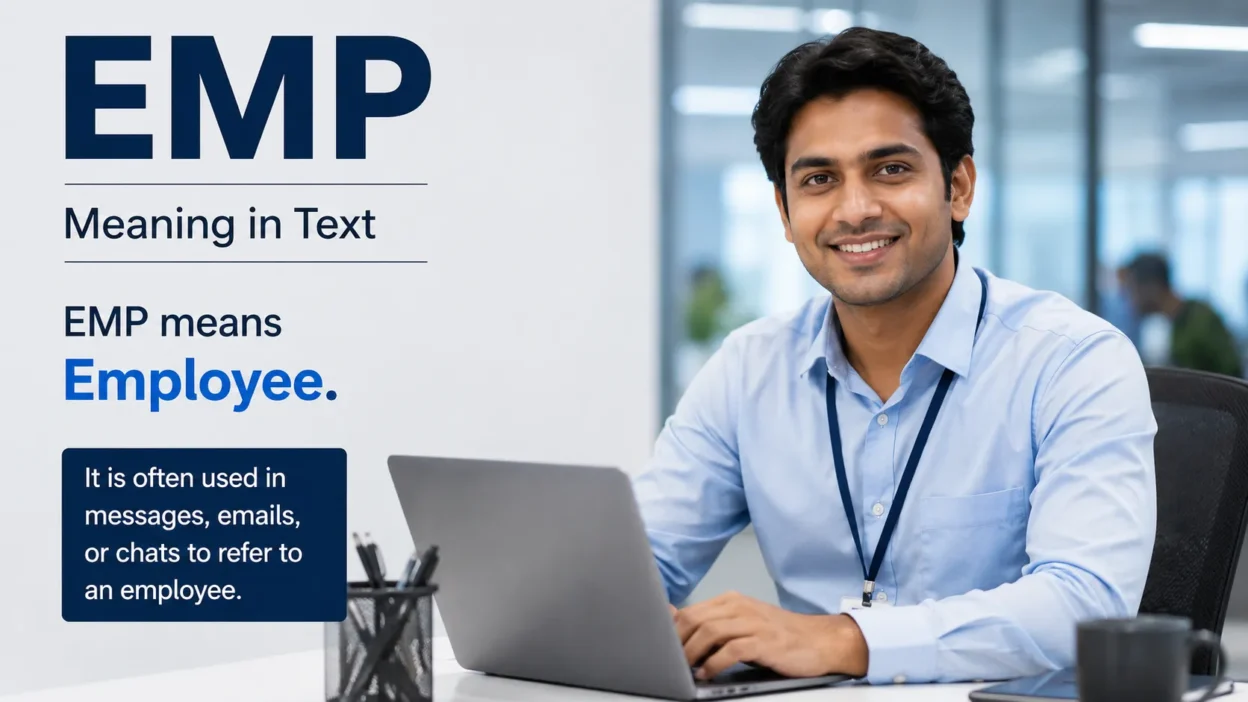
EMP usually means Employee in text and online communication. It’s a simple and convenient abbreviation often used in workplace conversations, business discussions, and social media posts related to jobs or employment.
What Does EMP Mean in Text?
In texting and online communication, EMP is most commonly used as a short form of Employee.
People use this abbreviation when discussing workplace topics, company policies, job roles, or employment-related matters. Using EMP helps save time while typing and keeps messages short.
Example:
“The new emp completed training today.”
In this sentence, emp simply means employee.
You may also see EMP used in:
- Work group chats
- HR discussions
- Business emails
- Employee management software
- Online forums about jobs
While EMP can have other meanings in specialized fields, such as technology or gaming, Employee is the most common meaning in everyday texting and workplace communication.
In short: EMP = Employee = A person who works for a company or organization.
Where Is EMP Commonly Used? 📱
You may come across EMP in several digital communication platforms:
📲 Text Messages
- Workplace texting
- Team coordination
- Employee discussions
💼 Work Chats
- Internal company messaging
- Staff announcements
- HR conversations
💬 Social Media
- LinkedIn posts
- Career discussions
- Employment-related content
🖥️ Online Forums
- Job seeker communities
- Business forums
- Human resources discussions
📧 Professional Communication
- Internal emails
- Employee reports
- Staff documentation
🎮 Gaming Communities
In some gaming or technology discussions, EMP may refer to something entirely different, so context matters.
Tone of EMP
| Platform | Tone |
| Workplace Chat | Professional |
| Text Message | Casual to Professional |
| Professional | |
| Social Media | Neutral |
| Professional |
Overall, EMP is generally considered a professional and workplace-friendly abbreviation.
Examples of EMP in Conversation 💬
Here are some realistic examples showing how EMP is used in chats.
Example 1
A: did the new hire start today?
B: yes, the new emp joined this morning 😊
Example 2
A: who’s handling customer support today?
B: one of our senior emp members 👍
Example 3
A: the company is hiring again
B: yeah, they’re looking for 20 new emp positions
Example 4
A: did everyone complete the training?
B: almost every emp finished it ✅
Example 5
A: who submitted the report?
B: a new emp from the marketing team
Example 6
A: attendance looks good this month
B: most emp members have perfect attendance 🎉
Example 7
A: who’s organizing the event?
B: one of the emp coordinators is handling it
These examples show how EMP naturally appears in workplace-related conversations.
When to Use and When Not to Use EMP 🕓
Like many abbreviations, EMP works well in some situations but not others.
✅ When To Use EMP
- Workplace group chats
- Internal team discussions
- Quick text messages
- HR conversations
- Employee-related reports
- Notes and documentation
- Informal professional communication
❌ When Not To Use EMP
- Formal business letters
- Academic writing
- Official contracts
- Legal documents
- Customer-facing communications
- Important presentations
- Situations where clarity is critical
In formal situations, writing the full word Employee is usually better.
Usage Comparison Table
| Context | Example Phrase | Why It Works |
| Friend Chat | “my emp schedule changed 😅” | Quick and casual |
| Work Chat | “new emp orientation starts monday” | Common workplace shorthand |
| Team Message | “all emp members should attend” | Efficient communication |
| HR Discussion | “emp records were updated” | Frequently used abbreviation |
| Formal Email | “The employee completed training.” | More professional |
| Legal Document | “Employee responsibilities include…” | Clear and official |
Similar Slang Words or Alternatives 🔄
Depending on the conversation, you may see these alternatives instead of EMP.
| Slang/Term | Meaning | When to Use |
| Emp | Employee | Workplace chats |
| Staff | Company workers | General workplace discussion |
| Worker | Person employed | Casual conversation |
| Team Member | Employee in a team | Professional communication |
| Associate | Employee or colleague | Corporate settings |
| Crew | Group of workers | Informal workplace discussions |
These alternatives may fit different situations depending on the tone and audience.
FAQs About EMP ❓
What does EMP stand for in text messages?
EMP most commonly stands for Employee in workplace and employment-related conversations.
Is EMP a slang term?
Not exactly. EMP is more of an abbreviation or shorthand than traditional internet slang.
Is EMP formal or casual?
EMP is generally suitable for workplace chats and informal professional communication but may be too informal for official documents.
Can EMP have other meanings?
Yes. In technology and science, EMP can refer to Electromagnetic Pulse. The meaning depends on the context.
Is EMP commonly used on social media?
Yes. It appears in discussions about jobs, hiring, businesses, and workplace experiences.
Should I use EMP in professional emails?
For formal emails, it is usually better to write Employee instead of using the abbreviation.
How can I tell what EMP means?
Look at the surrounding conversation. If people are discussing jobs, companies, or staff members, EMP almost always means Employee.
Conclusion
EMP is a simple abbreviation that usually means Employee in texting, workplace chats, and online discussions. It helps people communicate faster when talking about staff members, hiring, training, or company-related topics. While it’s perfectly acceptable in casual professional communication, using the full word “Employee” remains the best choice for formal documents and official correspondence. Understanding the context will help you recognize exactly what EMP means whenever it appears in a conversation.

J.K. Rowling is an internationally celebrated author whose words have inspired generations. Her meaningful quotes shared on MsgVibes.com reflect creativity, strength, and imagination.