Have you ever been scrolling through TikTok comments or texting a friend when someone suddenly replied with just “mood”? The first time you see it, it can feel a little confusing. Is the person talking about emotions? Their day? Or is it some kind of internet slang? The truth is, “mood” has become one of the most popular casual expressions online because it’s short, relatable, and easy to use in almost any conversation. From memes to Snapchat stories, people use it constantly to show they strongly relate to something funny, awkward, emotional, or painfully accurate.
Quick Answer:
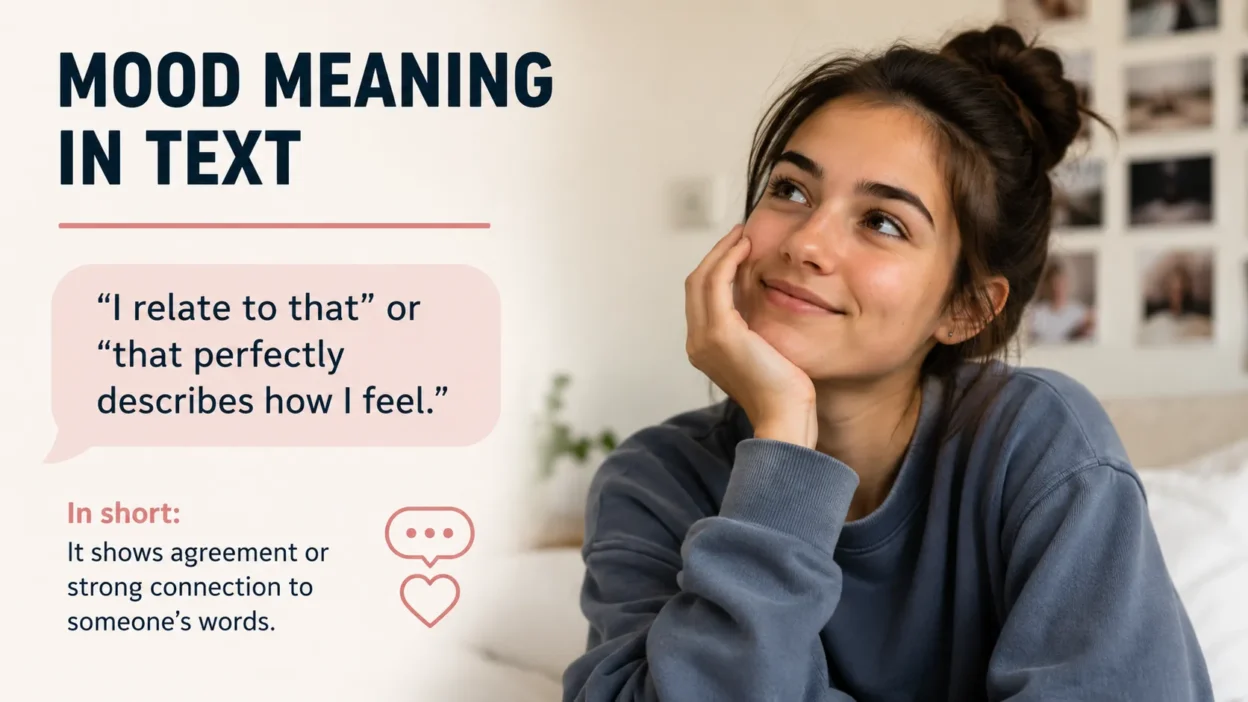
“Mood” means “I relate to that” or “that perfectly describes how I feel.” It’s a casual and social-media–friendly way of agreeing with someone’s emotions, situation, or reaction.
What Does Mood Mean in Text? 🧠
In texting and online slang, “mood” is used to show that something is extremely relatable.
When someone says “mood,” they mean:
- “same”
- “i feel that”
- “that’s exactly me”
- “i relate to this so much”
It’s often used in response to:
- funny memes
- emotional posts
- embarrassing situations
- tired or lazy moments
- relatable struggles
For example:
- “i stayed in bed all day watching netflix 😭”
- “mood honestly”
In this example, the second person relates to the lazy behavior and feels the same way.
People usually type “mood” by itself because the meaning is understood quickly online.
In short: Mood = “I relate to this” = expressing shared feelings or experiences.
Where Is Mood Commonly Used? 📱
“Mood” is extremely popular across social media and texting apps because it’s short, funny, and relatable.
Here’s where you’ll see it most often:
- 🎵 TikTok — reacting to relatable videos
- 👻 Snapchat — replying to stories or chats
- 📸 Instagram Comments — reacting to memes and reels
- 💬 Text Messages — casual conversations with friends
- 🐦 X/Twitter Posts — reacting to emotional or funny tweets
- 🎮 Gaming Chats — reacting to frustrating moments
- 😂 Meme Pages — describing relatable content
Is “Mood” Formal or Casual?
“Mood” is considered:
- ✅ Casual
- ✅ Trendy
- ✅ Social-media friendly
- ✅ Common among younger users
- ❌ Not professional
- ❌ Not formal writing
You probably shouldn’t use “mood” in business emails or professional conversations. It fits much better in relaxed online chats.
Examples of Mood in Conversation 💬
Here are some realistic examples showing how people use “mood” in texting and social media conversations.
Example 1
A: i don’t wanna leave my bed today 😩
B: mood honestly
Example 2
A: spent all my money on food again 😭
B: mood 😂
Example 3
A: me pretending to understand math in class
B: mood fr
Example 4
A: slept at 3am and now regretting everything
B: mood every single night
Example 5
A: when the teacher says “group project”
B: mood 😭
Example 6
A: i said i’d save money this month
B: mood and then online shopping happens
Example 7
A: cries over fictional characters again
B: mood tbh
These examples show that “mood” is often used as a quick reaction instead of a full sentence.
Why Do People Say “Mood”? 🤔
People use “mood” because it instantly creates connection and relatability online.
Instead of typing:
- “I completely understand how you feel.”
Someone can simply type:
- “mood”
It’s faster, funnier, and feels more natural in internet culture.
The slang became popular because social media is filled with relatable memes, emotional posts, and funny life struggles. Saying “mood” became an easy way to agree with those feelings.
It also helps conversations feel more expressive without needing long explanations.
Can Mood Be Flirty? ❤️
Sometimes, yes.
Most of the time, “mood” is casual and friendly. But depending on context, it can become playful or slightly flirty.
For example:
- “wanting cuddles 24/7 😭”
- “mood honestly”
In this case, the reply can sound cute or playful because the person relates to the romantic feeling.
Still, “mood” itself is not directly flirtatious. The tone depends on the conversation.
When to Use and When Not to Use Mood 🕓
Like most slang terms, “mood” works best in casual situations.
✅ When To Use Mood
Use “mood” when:
- reacting to relatable memes
- chatting casually with friends
- responding to emotional posts
- joking online
- commenting on TikTok or Instagram
- expressing shared feelings
- reacting to funny struggles
❌ When Not To Use Mood
Avoid using “mood” when:
- writing professional emails
- discussing serious emergencies
- talking in formal meetings
- communicating with clients
- writing academic assignments
- speaking in legal or official situations
Here’s a quick comparison table:
| Context | Example Phrase | Why It Works |
| Friend Chat | “mood 😂” | Casual and relatable |
| TikTok Comment | “this is such a mood” | Fits social media culture |
| Meme Reaction | “big mood honestly” | Expressive and trendy |
| Work Chat | “I understand completely.” | Professional tone |
| “I can relate to this concern.” | Formal and clear |
What Does “Big Mood” Mean? 🔥
You may also see people say “big mood.”
“Big mood” is simply a stronger version of “mood.”
It means something feels extremely relatable.
For example:
- “canceling plans to stay home is a big mood”
This shows the person strongly relates to wanting to stay home instead of going out.
“Big mood” became very popular on TikTok, meme pages, and Twitter because it sounds more dramatic and funny.
Similar Slang Words or Alternatives 🔄
There are many slang words similar to “mood” that people use online.
| Slang | Meaning | When to Use |
| Same | I agree or relate | Casual conversations |
| FR | For real | Agreeing seriously |
| Big Mood | Extremely relatable | Funny or emotional moments |
| Tbh | To be honest | Honest reactions |
| Literally Me | Deeply relatable | Meme culture |
| Facts | True or relatable | Agreeing strongly |
These alternatives often appear together in social media comments and texting culture.
Is Mood Still Popular? 📈
Yes, “mood” is still very popular online.
Even though internet slang changes constantly, “mood” remains common because it’s simple and versatile.
People use it daily on:
- TikTok
- Snapchat
- Discord
- X/Twitter
- meme pages
It has become part of everyday internet language, especially among younger users.
Should You Use Mood in Texts?
If you enjoy casual texting and social media culture, “mood” is a great slang word to know.
It’s useful for:
- reacting quickly
- relating to friends
- responding to memes
- keeping chats fun and natural
- expressing emotions casually
Just remember that it’s best saved for informal conversations.
In professional settings, full sentences sound more respectful and clear.
FAQs About Mood ❓
What does “mood” mean in slang?
It means “I relate to that” or “that describes me perfectly.”
Is “mood” positive or negative?
It can be both. People use it for funny, emotional, awkward, or relatable situations.
What does “big mood” mean?
“Big mood” means something feels extremely relatable.
Is “mood” formal?
No. It’s casual internet slang mostly used online and in texting.
Can “mood” be flirty?
Sometimes. The tone depends on the context of the conversation.
Why do people comment “mood” on TikTok?
They use it to show they strongly relate to the video or situation.
J.K. Rowling is an internationally celebrated author whose words have inspired generations. Her meaningful quotes shared on MsgVibes.com reflect creativity, strength, and imagination.